
During the weekend of 5th of September 2026, we got our first proper thunderstorm of the season. I was at home, by the fireplace, doing what I think most people secretly love doing during a storm — sitting indoors, warm, watching it happen through a window instead of in it. There's not much that beats that feeling.
I had no idea that a few kilometres away, a single lightning strike was quietly rewriting my week ahead.
It hit one of five warehouses we support on a single site for a hundred-year-old, JSE-listed distributor. This particular building moves 1,200 picks an hour across 14,250 square metres of floor — a pick being an item taken off the shelf and loaded onto the correct truck, scanned and logged in real time at every step in between. That pace is the business. Lose the network for a minute, and a scan mid-transit doesn't pick up where it left off — it restarts. At 1,200 picks an hour, in peak season, that adds up fast.
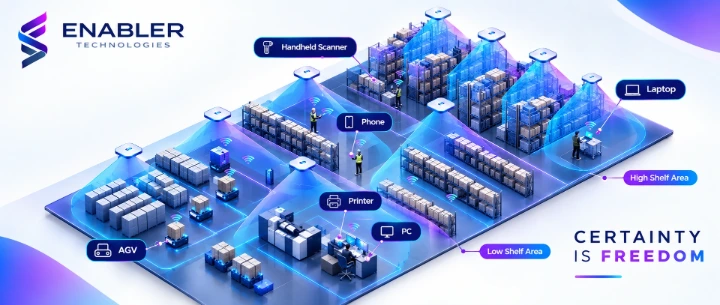
The strike took out three access points. We had replacements on site and swapped in before the next shift — the kind of fast, clean fix that makes for a satisfying update to send a customer. By close of business Monday, as far as anyone could tell, it was over.
It wasn't.
By 3:05 the next morning, the replacement units had put themselves into self-protection mode on their own — shutting themselves down rather than risk running on power that wasn't behaving the way it should. That's not a symptom you fix by swapping another AP. It's a switch flipping in your head: this might not be three access points. This might be the first visible sign of damage sitting further back in the chain — in a switch, a UPS, a surge protector — quietly compromised by the strike and waiting to fail on its own schedule, possibly mid-shift, possibly at the worst hour of the busiest week of the year.
That question — is this contained, or is this the first sign of something worse — is the one that actually matters in an incident like this. Anyone can replace a part that's visibly broken. The harder job is deciding whether to trust that the visible damage is all the damage, and being right about it.
We didn't trust it. Line management went to site — safety boots, hi-vis, hard hats — and walked the actual infrastructure, not just the ticket. They found what the self-protecting APs were warning about: switches further down the chain carrying damage the initial fix hadn't touched. Those got replaced too.
Not a single PO raised through any of it, from the first AP to the last switch. We're not naive about paperwork — it matters, and it follows. But there's a difference between being clever about how you run a business and honouring what a handshake actually means when a customer needs you on site, in boots, before the invoice exists. We know which one we'd rather be known for.
By the time it was actually finished — not "the parts are replaced" finished, but "we've confirmed there's nothing else waiting to fail" finished — the warehouse hadn't lost a shift. And it was one of five we run on that customer's site, which is really the point: this wasn't the whole relationship having a bad week. It was one building, one storm, and a team that went looking for the damage nobody could see yet instead of stopping at the damage everyone could.
Our Concierge Team is still watching that site — the conversation about making sure this doesn't get a second chance is only just starting.